Chapter 1 · The Dark WoodguidePlayable
Virgil
The shade waiting at the bottom of the wood, who opens the road down.
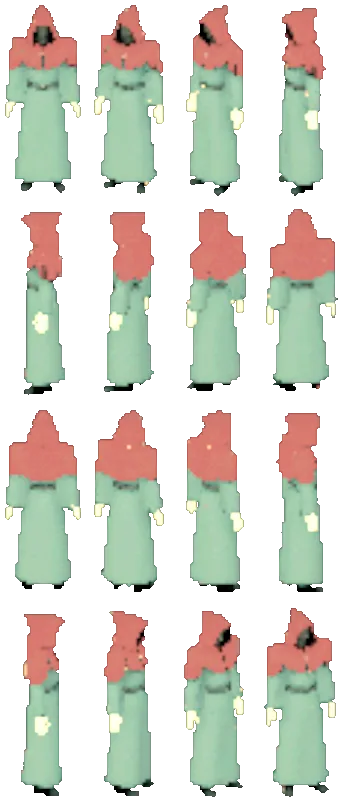
Virgilio, «chi per lungo silenzio parea fioco» (I, 63): la ragione umana, che guida fin dove può e non oltre. È fioco perché da secoli nessuno lo ascolta. Vicino a lui la paura si queta.
«Chi è tu, o ombra o omo certo?», Dante asks, and the answer is «non omo, omo già fui». That is why he has no face in the game: a well built figure would say he is a man before the question could even be asked. What you see is a shape darker than the wood, standing still, and two hands, and three breaks are enough to read it as human: shoulders wider than the neck, neck narrower than the head, arms clear of the body.
He speaks one line per press and never in blocks, because six lines at once are a signpost and signposts get skipped; the last line is deliberately not informative, so that when you stop pressing what is left is his face. He also says the two lines that belong to the second canto, the three blessed women and Beatrice, because without them the journey has no reason anywhere.
He is the one who opens the gate, and he is the one who makes the she wolf give up, exactly as in the canto: the beast is defeated by nobody, she leaves the stage when the guide appears and stays off it. The same cloaked figure is the one waiting in front of the gate on the menu, and it is one class because they are one person. The note the game prints says what he does not: he is human reason, guiding as far as it can and no further, faint because for centuries nobody has listened to him, and near him fear goes quiet.
The numbers
| What | How much |
|---|---|
| Pulls needed to lift the fallen trunk | 3 |
| How long one pull lasts | 1.05 s |
Links
- Found in
- The Dark Wood
- See also
- The She Wolf, The Quarry and the Gate
- Named by
- The She Wolf, Phlegyas, Geryon, Medusa, Limbo